


Mini Gastrik Bypass
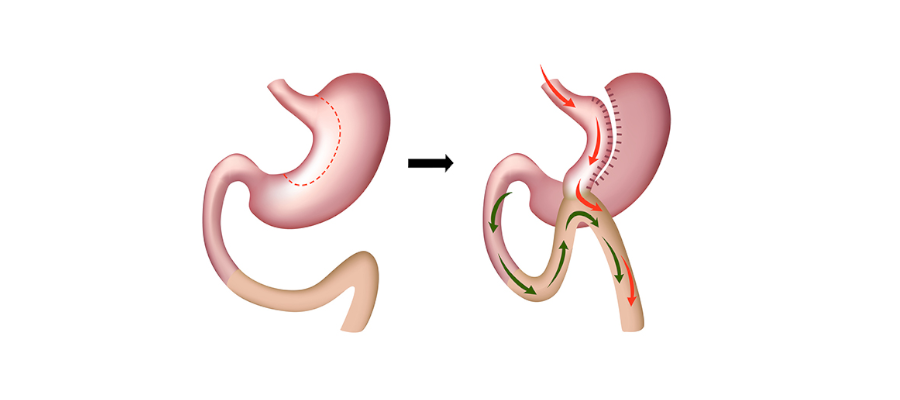
he Mini-Gastric Bypass, or single anastomosis gastric bypass, is an effective and well-established procedure that combines some of the features of sleeve gastrectomy surgery and a standard gastric bypass. The upper part of the stomach is formed into a tube as in sleeve gastrectomy surgery and then joined into an intestinal loop. In this way, both the capacity of the stomach is reduced and the food is passed from the stomach to the intestine in a short way, reducing the absorption of nutrients and weight loss is achieved with a secondary effect.
Mini-gastric bypass can be used as a primary weight loss procedure. It can also be used in patients who have had previous gastric banding or sleeve gastrectomy surgery, but have failed to lose weight, or have had band-related complications and have decided on revision surgery.
In this procedure, the upper part of the stomach is stapled to form a thin tube (30 ml to 50 ml in size). The new thin tube becomes the smaller stomach and is completely separated from the rest of the stomach. This stomach is then sutured to a loop of the small intestine, bypassing the first part of the intestine called the duodenum and approximately 150-200 cm of the intestines. The rest of the stomach and upper part of the small intestine remain in the body but are no longer used for food digestion.
Many studies have been published on the long-term (more than 5 years) effects of mini-gastric bypass surgery. Two years after surgery, weight loss is 75-85% of excess body weight.

